
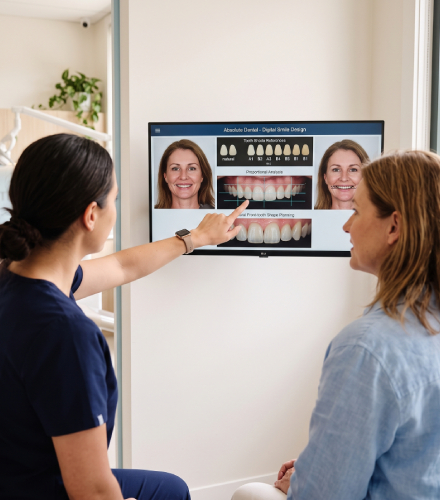
MiVeneer® 5D: Individually Planned Dental Veneers in West Perth
MiVeneer® is Absolute Dental’s structured approach to porcelain veneer treatment: Diagnose, Design, Detail, Deliver and Defend.
Rather than treating veneers as a standard cosmetic package, the MiVeneer® pathway begins with oral health, suitability and treatment alternatives. It then considers smile planning, ceramic detail, bite, treatment delivery and ongoing maintenance.
MiVeneer® is not a particular veneer material or a guarantee of a specific cosmetic result. It is the process used to assess whether veneers may be appropriate and to plan treatment according to your teeth, gums, bite, facial features and smile goals.
Planned Around Your Teeth, Face and Bite
Porcelain veneers can change the appearance of selected teeth, but the proposed smile needs to work with the surrounding teeth, gums, lips, facial proportions and bite.
Digital scans, photographs, shade records and smile-planning tools may be used where clinically appropriate to help communicate proposed shapes and proportions before final ceramic treatment begins.
A Suitability-Led Approach
Veneers are not suitable for every patient or every cosmetic concern.
Before treatment is recommended, the dentist may assess:
- The condition of the teeth and gums
- The amount and quality of available enamel
- Existing fillings, crowns or veneers
- Tooth position and bite relationships
- Signs of grinding or clenching
- Smile line and facial proportions
- Shade, shape and symmetry concerns
- Your expectations and preferred outcome
- Possible treatment alternatives
Why MiVeneer® 5D
Benefits of the MiVeneer® 5D Pathway
Porcelain veneer treatment involves more than selecting a tooth shade.
Suitability, tooth preservation, smile design, ceramic detail, bite, delivery and ongoing care may all influence the treatment plan.
MiVeneer® brings these considerations together through one structured pathway.
The 5D Pathway
What You Need to Know About MiVeneer®
The five stages of MiVeneer® explain what may happen before, during and after porcelain veneer treatment.
Each stage addresses a different part of the pathway, from assessing whether veneers may be suitable to helping maintain the final restorations over time.
- Diagnose
The first stage focuses on suitability and oral health.
The dentist may assess the teeth, gums, available enamel, existing restorations, bite, smile line, facial proportions, shade goals, expectations, risks and treatment alternatives.
- Design
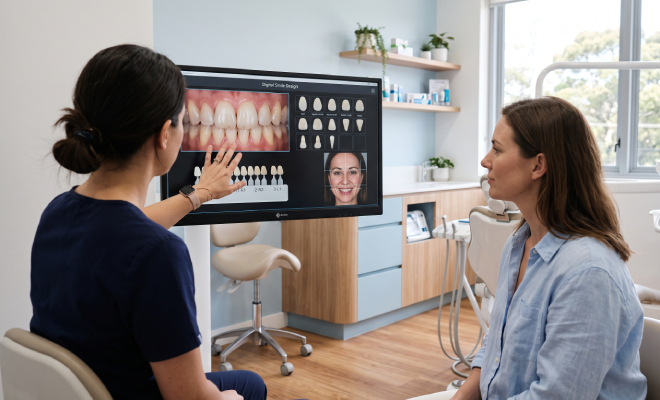
The proposed smile is planned before final ceramic treatment begins.
Digital scans, photographs, shade records, facial analysis and a trial smile or mock-up may be used where clinically appropriate to help communicate proposed shapes and proportions.
- Detail
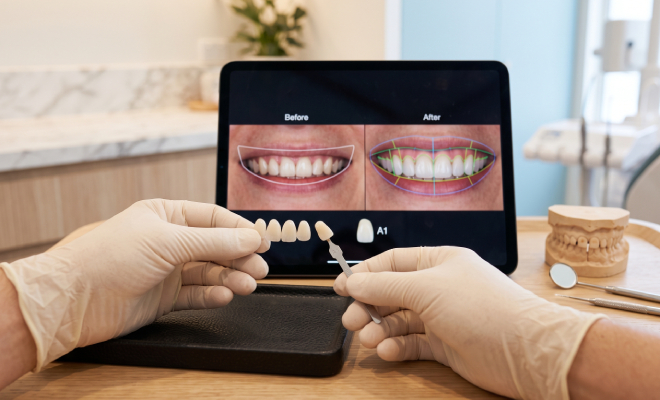
The appearance of porcelain veneers depends on more than choosing a colour.
Ceramic type, shade, translucency, line angles, edge position, symmetry, gum harmony, speech and bite contacts may all be considered during planning.
- Deliver
Treatment may involve conservative tooth preparation where clinically appropriate, temporary restorations, a try-in stage, bonding, fit and shade checks, bite adjustment and final polishing.
The exact sequence depends on the individual treatment plan.
- Defend
Porcelain veneers require ongoing care.
Maintenance may include hygiene guidance, dental reviews, bite monitoring, photography and discussion of a protective splint where grinding or clenching risks are present.
Who It May Help
Concerns That May Be Discussed During a MiVeneer® Consultation
A MiVeneer® consultation may be relevant if you are considering changes to the shape, shade or proportions of selected front teeth.
A clinical assessment is required to determine whether porcelain veneers, another treatment option or no treatment may be appropriate.
- Teeth that appear unusually small or uneven in shape
- Tooth colour that may not respond sufficiently to whitening
- Small chips or worn front-tooth edges
- Minor gaps between selected teeth
- Older veneers causing aesthetic or maintenance concerns
- Several front teeth with differences in shape or proportion
- Selected teeth that appear asymmetrical
- Patients seeking a natural-looking rather than highly uniform smile
Natural Smile Planning
A Natural Smile, Not a One-Size-Fits-All Makeover
The aim of MiVeneer® is not to create the same white, uniform smile for every patient.
Veneer planning considers the face, lips, gum line, neighbouring teeth, tooth proportions, shade and the way light interacts with the ceramic.
The proposed design should suit the individual rather than follow a standard cosmetic template.
Shape and proportion
Shade and translucency
Gum harmony
Bite and function


Easy Payment Options, with No Surprises
All costs are discussed ahead of time so that there are never any surprises. A HICAPS machine is located on-site to process health fund claims on the spot.
Get the Smile you deserve today with interest free fortnightly payments
National Dental Plan, powered by Humm makes our high quality dental treatment more accessible. With the National Dental Plan you can commence up to $12,000 in treatments today and spread the cost over fortnightly payments, and best of all you pay NO INTEREST EVER!
Afterpay available
See how it works or ask us for more information.
FAQ
Frequently Asked Questions About MiVeneer®
What is MiVeneer®?
MiVeneer® is Absolute Dental’s structured approach to porcelain veneer treatment. The five stages are Diagnose, Design, Detail, Deliver and Defend.
It is a planning and care pathway rather than a particular veneer material or a guarantee of a specific cosmetic result.
Are porcelain veneers suitable for everyone?
No. Suitability depends on the condition of the teeth and gums, available enamel, bite, existing restorations, oral hygiene, expectations and other individual factors.
Some patients may benefit from whitening, composite bonding, orthodontic treatment, crowns or no treatment instead.
What happens during a MiVeneer® consultation?
The dentist examines the teeth, gums and bite and discusses your smile goals and concerns.
The appointment may include photographs, digital scans, shade records and discussion of possible treatment options, risks, maintenance and fees.
Can I preview my proposed smile?
Digital planning, photographs and a trial smile or mock-up may be available where clinically appropriate.
These tools can help communicate proposed shapes and proportions, but they do not guarantee that the final result will be identical.
Do veneers always require tooth preparation?
The amount of preparation varies.
Some cases may require conservative preparation, while others may require more significant alteration. Some patients may not be suitable for veneer treatment at all.
Will porcelain veneers look natural?
The dentist considers tooth shape, proportion, shade, translucency, gum line, facial features and neighbouring teeth when planning the proposed smile.
The achievable appearance depends on the clinical situation, and individual outcomes vary.
Can veneers close gaps between teeth?
Porcelain veneers may be one option for selected small gaps.
Composite bonding or orthodontic treatment may be more appropriate in some cases, particularly where tooth position or bite is the main concern.
Can veneers repair chipped or worn teeth?
Selected chips or worn edges may be suitable for veneers, composite bonding, crowns or another restorative option.
The most appropriate treatment depends on the amount of remaining tooth structure, bite and other clinical factors.
How long can porcelain veneers last?
There is no guaranteed lifespan.
Veneer longevity may be influenced by tooth condition, bonding, bite forces, grinding or clenching, oral hygiene, gum health, maintenance and accidental damage.
Can porcelain veneers stain?
Porcelain is generally more resistant to staining than natural tooth structure or composite resin.
However, surrounding teeth, exposed tooth surfaces and margins may still be affected by plaque, staining or decay.
Do I need a nightguard after veneers?
Not every patient requires one.
A protective splint may be discussed where there are signs of grinding, clenching, tooth wear or bite overload.
Are veneers reversible?
Porcelain veneer treatment may require irreversible alteration of tooth structure.
The amount varies between cases, and your dentist will explain the proposed preparation, risks and alternatives before treatment.
How much does MiVeneer® treatment cost?
Fees depend on the number of teeth, required planning, ceramic work, tooth preparation, temporary restorations and case complexity.
An itemised treatment plan can be provided following a suitability consultation.