
MiCrown® 5D: Same-Day Dental Crowns in West Perth
MiCrown® 5D is Absolute Dental’s structured crown and bridge pathway for damaged teeth, old crowns, root canal teeth, missing-tooth gaps and selected same-day CEREC crown cases.
If you have cracked a tooth, lost part of a filling, been told a root canal tooth may need protection, or have an old crown causing concern, the first step is a careful assessment. Your dentist can explain whether a filling, onlay, crown, bridge, implant-related restoration or another option may be suitable.
Same-day CEREC crowns may be available for selected single-tooth cases after clinical assessment.
Same-Day Crowns
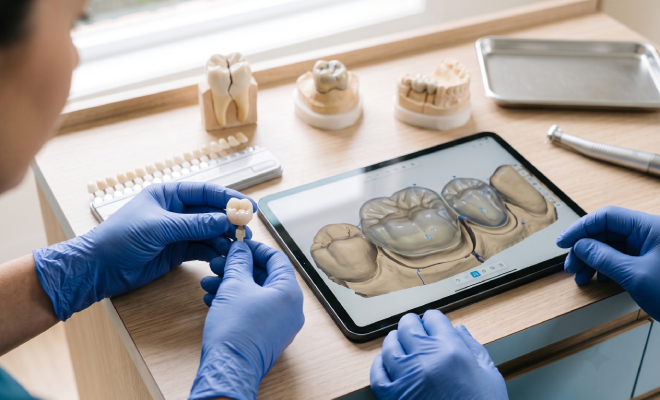
Selected cases may be suitable for same-day crown treatment using Absolute Dental’s CEREC workflow.
Same-day treatment may allow digital scanning, in-house design, fabrication and placement during one appointment. It is not automatically the best option for every tooth. Some cases may benefit from staged treatment, additional planning, provisional restorations or laboratory involvement.
Customised Restorative Options
A crown is not always the only option for a damaged or weakened tooth.
Depending on the amount of healthy tooth structure remaining, the location of the tooth, bite forces, gum condition, symptoms and other factors, your dentist may discuss one or more options:
- monitoring
- filling
- onlay
- dental crown
- dental bridge
- implant crown
- staged care
- extraction where clinically required
Why Micrown® 5D
Benefits of the MiCrown® 5D Pathway
MiCrown® brings diagnosis, planning, restorative detail, delivery and long-term care together in one structured pathway.
The pathway begins by understanding why the tooth needs attention, rather than automatically assuming that every damaged tooth needs the same treatment.
It also allows your dentist to consider the tooth, bite, appearance, material, cleaning access and future maintenance as part of one overall plan.

The 5D Pathway
What You Need to Know About MiCrown® 5D
The five stages of MiCrown® 5D explain what happens before, during and after crown or bridge treatment.
Each stage addresses a different part of the restorative journey, from understanding why the tooth has become damaged to helping maintain the restoration after it is fitted.
- Diagnose
The first stage focuses on understanding why the tooth requires attention.
The dentist may assess cracks, decay, old fillings, previous root canal treatment, symptoms, remaining tooth structure, gum support, nerve considerations, bite forces and available alternatives. - Design
The restoration is planned around the individual tooth, bite, appearance, material requirements and long-term cleaning needs.
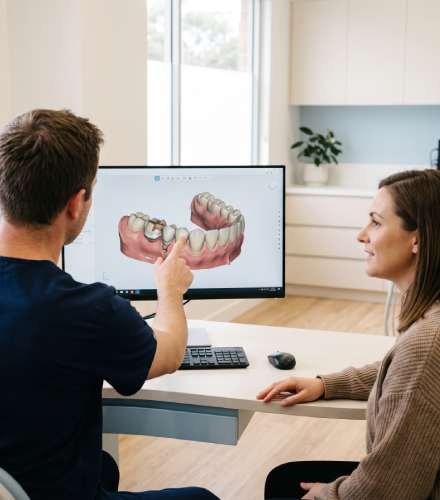
Digital scans and restorative technology may support the planning process, but clinical assessment determines which treatment and workflow may be suitable. - Detail
Small factors such as the restoration edge, contact with neighbouring teeth, shape, shade, bite and cleaning access may influence how a crown or bridge feels and functions.
These details are considered as part of the design and fitting process. - Deliver
During delivery, the restoration is assessed for seating, contacts, bite, comfort, appearance and cleanability before it is finalised.
Patients also receive appropriate care instructions and information about recommended review appointments. - Defend
Crowns and bridges still rely on the health of the supporting tooth, gums, bite and surrounding mouth.
Ongoing care may include cleaning guidance, hygiene appointments, bite reviews, monitoring for decay or gum concerns, and discussion of a nightguard or splint where clinically indicated.
Who It May Help
Situations Where a MiCrown® Assessment May Be Considered
A MiCrown® assessment may be relevant when a tooth is damaged, heavily restored, difficult to clean or being considered as part of a larger restorative plan.
A clinical examination is required to determine which treatment, if any, may be appropriate.
Cracked or broken teeth Large or repeatedly failing fillings Teeth following root canal treatment Older crowns causing concerns Missing teeth being considered for a bridge Implant crowns Multiple or complex restorative cases
- Cracked or broken teeth
- Large or repeatedly failing fillings
- Teeth following root canal treatment
- Older crowns causing concerns
- Missing teeth being considered for a bridge
- Implant crowns
- Multiple or complex restorative cases
Treatment Options
Same-Day Where Suitable, Staged Where Appropriate
Absolute Dental offers same-day crowns for selected patients using its CEREC workflow.
Some single-tooth cases may be suitable for digital scanning, in-house design, fabrication and placement during one appointment.
Other cases may benefit from staged treatment, particularly where complex aesthetics, bridges, multiple teeth, limited tooth structure or bite-related concerns are involved.
The MiCrown® pathway considers the tooth, bite, material, appearance and case complexity before deciding whether same-day or staged treatment may be more appropriate.


Easy Payment Options, with No Surprises
All costs are discussed ahead of time so that there are never any surprises. A HICAPS machine is located on-site to process health fund claims on the spot.
Get the Smile you deserve today with interest free fortnightly payments
National Dental Plan, powered by Humm makes our high quality dental treatment more accessible. With the National Dental Plan you can commence up to $12,000 in treatments today and spread the cost over fortnightly payments, and best of all you pay NO INTEREST EVER!

Afterpay available
See how it works or ask us for more information.
FAQ
Frequently Asked Questions
What is MiCrown® 5D?
MiCrown® 5D is Absolute Dental’s structured approach to crown and bridge treatment. The five stages are Diagnose, Design, Detail, Deliver and Defend.
It is a planning and care pathway rather than a particular crown material or dental device.
Is MiCrown® a special type of crown?
No. MiCrown® is not a type of porcelain, ceramic or zirconia.
The name describes the process used to assess the tooth, consider treatment options, plan the restoration, check its fit and function, and provide ongoing maintenance guidance. The appropriate material is selected according to the individual tooth and clinical requirements.
Does every damaged or broken tooth need a crown?
No. A crown is not automatically required for every damaged tooth.
Depending on the clinical findings, possible options may include monitoring, a filling, an onlay, a crown, a bridge, implant-related treatment, extraction or another restorative pathway. Your dentist will discuss the available options after examining the tooth.
Can MiCrown® treatment be completed in one appointment?
Some selected cases may be suitable for a same-day digital crown using Absolute Dental’s CEREC workflow.
Other cases may benefit from staged treatment, particularly where bridges, multiple teeth, complex aesthetics, limited remaining tooth structure or bite-related concerns are involved.
What happens during a MiCrown® assessment?
The dentist will examine the affected tooth or area and discuss your symptoms and concerns.
The assessment may include reviewing the remaining tooth structure, existing fillings or crowns, decay risk, gum support, bite forces and possible treatment alternatives. Photographs, digital scans or X-rays may be used where clinically indicated.
Can an old crown be replaced?
An existing crown can be assessed if it is loose, fractured, difficult to clean, trapping food, affecting the gums or showing signs of decay or wear.
Before recommending replacement, the dentist will consider why the existing crown is causing concern and whether replacement or another option may be appropriate.
How long can a dental crown last?
The lifespan of a crown varies between patients and cannot be guaranteed.
Factors that may affect its longevity include the condition of the supporting tooth, bite forces, grinding or clenching, oral hygiene, decay risk, gum health, crown material and ongoing maintenance. The MiCrown® brief specifically advises against promising that a restoration will be permanent or guaranteed.
Will my crown look natural?
When planning a visible crown, the dentist may consider factors such as tooth shape, shade, translucency, gum line, neighbouring teeth and smile position.
The achievable result depends on the clinical situation, the underlying tooth and the selected material. Individual outcomes vary.
What is the difference between a crown and a bridge?
A crown generally covers and restores an individual tooth.
A bridge replaces one or more missing teeth and is supported by teeth or implants beside the gap. Before recommending a bridge, the dentist assesses the support teeth, bite, span and cleaning access.
Do I need a nightguard after crown treatment?
Not every patient requires a nightguard or splint.
Bite protection may be discussed where there are signs of grinding, clenching, repeated fractures, tooth wear or increased risk to existing dental work. Suitability requires an individual clinical assessment.
How should I care for a crown or bridge?
Daily brushing, cleaning between the teeth and regular dental and hygiene reviews remain important.
Bridges may require additional cleaning beneath the replacement tooth and around the supporting teeth. Your dental team can explain which cleaning aids may be suitable for your restoration.
How much does MiCrown® treatment cost?
Fees depend on the tooth or area being treated, the type of restoration, selected material, clinical complexity, technology used and whether additional treatment is required.
After your assessment, the clinic can provide an itemised treatment plan explaining the recommended treatment and associated fees.
Suitability, risks, alternatives, fees, treatment stages and expected outcomes are assessed during consultation. Individual outcomes and treatment timelines vary according to clinical circumstances. Dental implant placement is a surgical procedure and carries risks.