
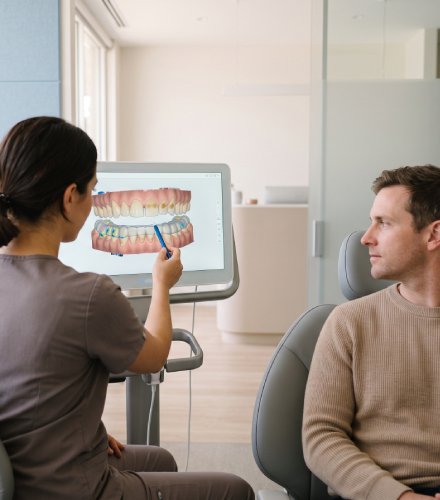
MiSplint® 5D: Custom Dental Splints and Night Guards in West Perth
MiSplint® 5D is Absolute Dental’s structured approach to bite protection: Diagnose, Design, Detail, Deliver and Defend.
It is intended for selected patients whose natural teeth, crowns, veneers, implants or other dental work may be affected by grinding, clenching or bite overload.
MiSplint® is not simply the name of a nightguard. It describes the process used to assess bite-related risk, plan the appliance, check its fit and function, provide wearing and care instructions, and review it over time.
Designed Around Your Bite
A custom splint should be planned around the individual teeth, bite, existing restorations and clinical risk profile.
The dentist may consider factors such as the appliance type, upper or lower arch, thickness, material, retention and the way the splint contacts the opposing teeth.
Protection as Part of Preventive Care
A splint may form part of a broader preventive-care plan where there are signs of grinding, clenching, tooth wear, repeated fractures or pressure on existing dental work.
Depending on your clinical situation, MiSplint® may be discussed in relation to:
- Grinding or clenching signs
- Worn or shortened teeth
- Repeatedly cracked teeth or fillings
- Crowns and bridges
- Porcelain veneers
- Dental implant restorations
- Complex restorative treatment
- Bite-related jaw or muscle symptoms requiring assessment
Why MiSplint® 5D
Benefits of the MiSplint® 5D Protocol
A custom splint is more than the material placed over the teeth.
Assessment, appliance design, fit, bite adjustment, patient instructions and ongoing review may all influence how the splint is used and maintained.
MiSplint® 5D combines these considerations into one structured bite-protection pathway.
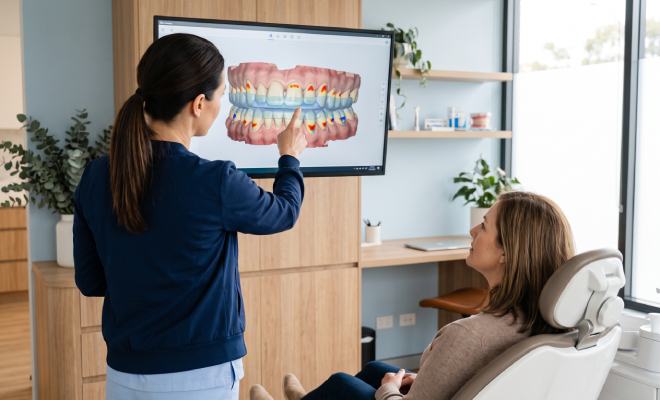
The 5D Pathway
What You Need to Know About MiSplint® 5D
The five stages of MiSplint® 5D explain what may happen before, during and after a custom occlusal splint is provided.
Each stage addresses a different part of the pathway, from understanding why bite protection may be needed to checking and maintaining the appliance over time.
- Diagnose
The first stage focuses on understanding why bite protection may be needed.
The dentist may assess signs of grinding or clenching, tooth wear, cracks, jaw symptoms, muscle tenderness, bite forces, sleep-related concerns and the condition of existing crowns, veneers, fillings or implants.
- Design
The appliance is planned around the individual teeth, bite and restorative work.
The dentist may consider the most appropriate arch, appliance type, thickness, material and bite-contact pattern according to the clinical situation.
- Detail
Fit, smoothness, polish, retention, comfort and bite contacts are checked as part of the appliance workflow.
These details may influence how the splint feels, functions and can be worn consistently.
- Deliver
The splint is fitted by a dentist, checked for pressure areas and adjusted according to the bite.
Patients also receive instructions about wearing, cleaning, storage and what to do if discomfort or changes occur.
- Defend
The splint and bite are reviewed over time.
Ongoing care may include checking wear, fit and bite contacts, reassessing the appliance after new dental treatment and replacing or adjusting it when clinically required.
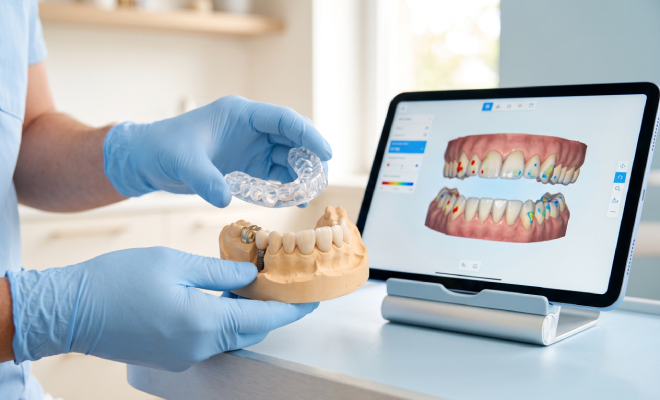
Who It May Help
Situations Where a MiSplint® Assessment May Be Considered
A MiSplint® assessment may be relevant where there are signs that the teeth, bite or existing dental work are being exposed to increased pressure.
A clinical assessment is required to determine whether a splint, another treatment pathway or no appliance may be appropriate.
- Grinding or clenching signs
- Worn, shortened or flattened teeth
- Repeatedly cracked teeth or fillings
- Crowns or bridges that may require protection
- Porcelain veneers or cosmetic dental work
- Dental implant restorations
- Major restorative or full-mouth treatment
- Changes to the bite after new dental work
Understanding Bite Protection
What a MiSplint® May—and May Not—Do
MiSplint® is designed to help manage some of the effects of grinding, clenching and bite overload.
It is important to understand that a splint is a protective appliance, not a guarantee that the underlying habit or every future dental problem will stop.
May help
- Provide a physical barrier between opposing teeth
- Reduce direct tooth-on-tooth wear
- Help protect selected crowns, veneers and restorations
- Distribute bite forces according to the appliance design
- Support monitoring of grinding-related wear
- Provide a maintenance layer after selected restorative treatment
Does not guarantee
- That grinding or clenching will stop
- That all future cracks or fractures will be prevented
- A cure for temporomandibular disorders
- Permanent relief from jaw pain or headaches
- That every patient with grinding signs requires a splint


Easy Payment Options, with No Surprises
All costs are discussed ahead of time so that there are never any surprises. A HICAPS machine is located on-site to process health fund claims on the spot.
Get the Smile you deserve today with interest free fortnightly payments
National Dental Plan, powered by Humm makes our high quality dental treatment more accessible. With the National Dental Plan you can commence up to $12,000 in treatments today and spread the cost over fortnightly payments, and best of all you pay NO INTEREST EVER!
Afterpay available
See how it works or ask us for more information.
FAQ
Frequently Asked Questions About MiSplint®
What is MiSplint® 5D?
MiSplint® 5D is Absolute Dental’s structured bite-protection pathway. The five stages are Diagnose, Design, Detail, Deliver and Defend.
It includes bite-risk assessment, individual appliance planning, attention to fit and finish, dentist delivery and ongoing review.
Is MiSplint® the same as a nightguard?
Not exactly. MiSplint® includes a custom-made occlusal splint, but the name refers to the complete 5D Bite Protection Protocol, rather than only the appliance.
The pathway includes assessing bite-related risks, digitally designing the splint around the patient’s teeth and dental work, refining the fit and finish, fitting and adjusting it clinically, and reviewing it over time. It is designed to help protect teeth and restorations from the effects of grinding, clenching and bite overload, but it does not stop the grinding or clenching habit itself.
Does a MiSplint® stop teeth grinding?
Not necessarily.
A splint is designed to help protect teeth and dental work from some of the effects of grinding and clenching. It does not guarantee that the habit itself will stop.
Can a splint cure TMJ or jaw problems?
Temporomandibular disorders can have several causes, and no single appliance is suitable for every patient.
A splint may form part of conservative management in selected cases, but assessment is required before treatment is recommended.
What happens during a MiSplint® assessment?
The dentist examines the teeth, restorations, bite and wear patterns and discusses any symptoms such as jaw fatigue, muscle tenderness or repeated dental fractures.
Photographs, digital scans or other records may be used where clinically appropriate.
How do I know if I grind or clench my teeth?
Possible signs include worn or chipped teeth, cracked restorations, morning jaw fatigue, muscle tenderness, cheek or tongue marks and reports of grinding sounds during sleep.
These signs are not diagnostic by themselves and should be assessed by a dentist.
How often should I wear my MiSplint®?
Wearing instructions depend on the appliance and individual clinical situation.
Many splints are worn during sleep, but your dentist will provide instructions specific to your treatment.
How should I clean and store my splint?
Rinse the splint after use and clean it according to the instructions provided by the dental team.
Avoid hot water unless advised otherwise, as heat may distort some materials. Store the appliance in its case and bring it to relevant review appointments.
How long can a splint last?
The lifespan varies according to grinding forces, appliance material, care, fit and changes to the teeth or dental work.
Splints require regular inspection and may eventually need adjustment, repair or replacement.
Will a MiSplint® protect crowns, veneers or implants?
For selected patients with bite-overload risk, a custom splint may help protect natural teeth and certain restorations.
It cannot guarantee that all fractures, wear or complications will be prevented.
What should I do if the splint becomes uncomfortable?
Stop wearing it if instructed by your dentist or if it causes significant discomfort, and contact the clinic for advice.
Do not attempt to adjust or reshape the appliance yourself.
How much does MiSplint® treatment cost?
Fees depend on the required assessment, appliance design, material, case complexity, fitting and review requirements.
A treatment plan can be provided after your assessment.